|
The proposed Central Kowloon Route will cut journey time from Yau Ma Tei to Kai Tak to five minutes.
It will pass through Yau Ma Tei, home to many unique features, and the Highways Department is working to ensure these attractions stay in place for the enjoyment of future generations.
|
|
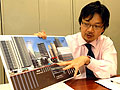
| New link: Highways Department Major Works Project Management Office Senior Engineer Robert Chan says the proposed Central Kowloon Route can help ease traffic between east and west Kowloon. Its construction will not affect Yau Ma Tei Police Station's old wing. | |
High-speed route
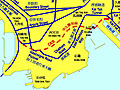
The department's Major Works Project Management Office Senior Engineer Robert Chan tells news.gov.hk that the 4.7km new link, costing $10 billion, will connect West Kowloon with Kowloon Bay and the future Kai Tak development. The high-speed route will be a dual three-lane road with a 3.9km tunnel passing below Yau Ma Tei, Ho Man Tin, To Kwa Wan and Kowloon City, catering for up to 4,700 vehicles an hour in one direction.
Noting people's concern about the impact of the new link's construction on Yau Ma Tei's local culture and heritage, the department has, apart from engineering issues, explored the district's cultural features and the route's social impact. Click here to tour the district's special features.
Mr Chan noted that there had been many public- engagement activities over the last few months, including three public forums, a visit to Yau Ma Tei Police Station, an inter-school planning contest, on-street surveys and in-depth interviews to gauge public views and gather information about the district in a comprehensive, systematic manner. The department also issues monthly newsletters to keep people abreast of the project's progress.
"This mode of public consultation, the first of its kind, helps us listen to public views via different channels in the project's planning stage so that the most suitable arrangements can be made," Mr Chan said.
Town planners and architects have been engaged to follow up on issues relating to the re-provision of community facilities and preservation of local culture, he noted.
"As the new link's construction will offer an opportunity to re-organise facilities in the area under sustainable development principles, the public consultation is conducted before the design stage so that we can have more room and flexibility to devise the project's scheme which can best respond to the public's aspirations."
Overwhelming response
Mr Chan said people's response to the public-engagement activities was overwhelming, adding their sentiment for Yau Ma Tei has impressed him during the interactions.
"They are very concerned about the future land use in the district. They want to know how can the local culture and heritage be preserved. They also want to see if the district's unique features, including the wholesale fruit market and the jade market, can be linked up.
"The series of public-engagement activities can help them understand better the benefits to be brought by the new link and let them have a chance to air their views and make decisions about the future of their 'home'," he added.
The department has reviewed more than 40 alignment options, taking into account the traffic, environmental and social impacts. Based on the public views received, the department has come up with the preferred alignment.
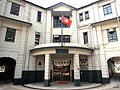
Under the preferred option, Yau Ma Tei Police Station's old wing, which was built in 1922, and Yau Ma Tei Jockey Club Polyclinic will be preserved. As the route will pass underneath the police station's new wing, it may require underpinning.
No private buildings will be affected. Three government buildings - Kowloon Government Offices, Yau Ma Tei Multi-storey Car Park Building and Yau Ma Tei Specialist Clinic - must be demolished and the Jade Market relocated.
Service relocation
Mr Chan said services of the specialist clinic will be moved to the polyclinic and Queen Elizabeth Hospital while the Jade Market operators will run their stalls temporarily on the multi-storey car park building site.
Temple Street is one of Yau Ma Tei's local characteristics featuring fortune-telling stalls and Chinese opera performances. The department will try to cut the impact on Temple Street Night Market and ensure access to the street during the new link's construction.
On environmental impact, Mr Chan said the issue has been at the top of the department's agenda, with green measures incorporated in the preferred alignment.
"We will build an enclosed deck over the tunnel portal in West Kowloon so that it will be about 300 metres away from existing dwellings and extensive greening will be carried out on the deck. The tunnel's ventilation building will be relocated, making it farther away from the dwellings. We will conduct an environmental impact assessment after confirming the alignment," he added.
At present, traffic between west and east Kowloon is served by Lung Cheung Road, Boundary Street, Prince Edward Road, Argyle Street, Waterloo Road and Gascoigne Road Flyover. These east-west links are always congested, with traffic along Lung Cheung Road, Prince Edward Road West and Boundary Street reaching 4,700, 3,600 and 3,000 vehicles in a single direction an hour.
"If the proposed Central Kowloon Route is not built, traffic along these east-west links will be 30% higher than their capacity. The need for the new route is imminent. It can help cut the journey time from Yau Ma Tei to Kai Tak to five minutes from 22 minutes during peak periods," Mr Chan said.
Works on the proposed link are scheduled to start in 2012 for completion in 2016.
Go To Top
|