|
A study has found 65.5% of Hong Kong people participated in sport at least once during the three-month survey period. The male participation rate was 68.4% while the female one was 62.9%.
More than 5,000 people were interviewed in the survey commissioned by the Sports Commission last year. The study showed with the increase in age the sport participation rate dropped significantly from 95.6% for those aged seven to 12, to 53.3% for those aged 60 or above.
|
|
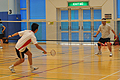
| Active promotion: Swimming and badminton are popular sports in Hong Kong. Assistant Director of Leisure & Cultural Services (Leisure Services) Olivia Chan explains future strategy of promoting community sports. | |
Popular sports
Of the participants, 41.2% of respondents took part in sport three times or more per week, and 80.3% at least once a week. The sports they participated in most were jogging (13.8%), swimming (13.2%) and badminton (10.1%). The three sports they were most eager to learn were swimming (14.7%), tai chi (10.3%) and badminton (8.8%).
More than half of the respondents (60.6%) used mainly Leisure & Cultural Services Department or other Government facilities.
The study found 51.4% of Hong Kong people failed to meet the level of the "baseline indicator" of physical activity level. The indicator is set at a level of at least an accumulation of 30 minutes a day and at least three days a week in moderate or vigorous physical activities.
Promotion strategy
Assistant Director of Leisure & Cultural Services (Leisure Services) Olivia Chan said the future strategy of promoting community sports will be divided into two phases.
The first will focus on:
* introducing the findings of the study to various stakeholders;
* enlisting stakeholders' support to promote "Sport for All' in the community; and,
* disseminating messages on the importance of regular participation in sport and other physical activities to the public.
In phase two, a comprehensive review of the existing composition of sport programmes and the needs for sport facilities will be conducted.
A wider range of sports and other physical activities will be designed to cater for the needs of different age groups. A similar study will be conducted regularly to collect updated information on people's participation in sport and physical activity.
Go To Top
|