 |
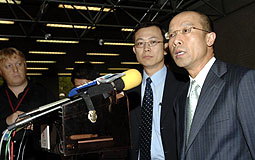
Testing, testing: Food & Environmental Hygiene Department Assistant Director Dr Thomas Chung and Assistant Director of Agriculture, Fisheries & Conservation Dr Liu Kwei-kin stress checks are conducted to ensure vegetables supplied from local and Mainland farms are safe for consumption. |

|
The Agriculture, Fisheries & Conservation Department has adopted a three-pronged approach to prevent vegetables containing pesticides from reaching market shelves, its Assistant Director Dr Liu Kwei-kin says.
He was responding to a Greenpeace report that says Park N Shop and Wellcome outlets were found selling vegetables with pesticide residues.
The Food & Environmental Hygiene Department is now following up on the report.
Dr Liu said Hong Kong aims to prevent vegetables with pesticide residues from being sold in three ways:
* it has a list of registered pesticides to control their use;
* it has in place an accredited farm scheme; and
* inspections are done at import, wholesale and retail levels.
Assistant Director of Food & Environmental Hygiene Dr Thomas Chung said his department is studying the Greenpeace report and has asked the two supermarkets to provide information on the source of vegetables in question while the relevant Mainland authorities have been informed of the incident, he added.
More than 90% of the vegetables in the city are from the Mainland, Dr Chung said. He stressed the Mainland has implemented management measures which require all vegetables supplied to Hong Kong to come from registered farms. Each consignment should be imported to Hong Kong with relevant documents, proving the vegetables are free of pesticide residues.
Frequent checks in place
Imported vegetables are inspected at Man Kam To, while checks will also be conducted at the wholesale and retail levels. Last year saw 20,000 vegetable samples tested for pesticide residues.
Dr Chung said test results so far are satisfactory, adding there were no reports on food poisoning caused by contaminated vegetables so far this year.
He noted Hong Kong has adopted the maximum residue limits and extraneous maximum residues limits for pesticides recommended by Codex Alimentarius Commission on tolerance levels of pesticide residues in foods.
Dr Liu said local produce accounts for about 4% in the market and most of the vegetables are wholesaled through the Vegetable Marketing Organisation, which conducts residue tests to ensure vegetables are safe for consumption.
Go To Top
|