Cultivating AI innovation on campus
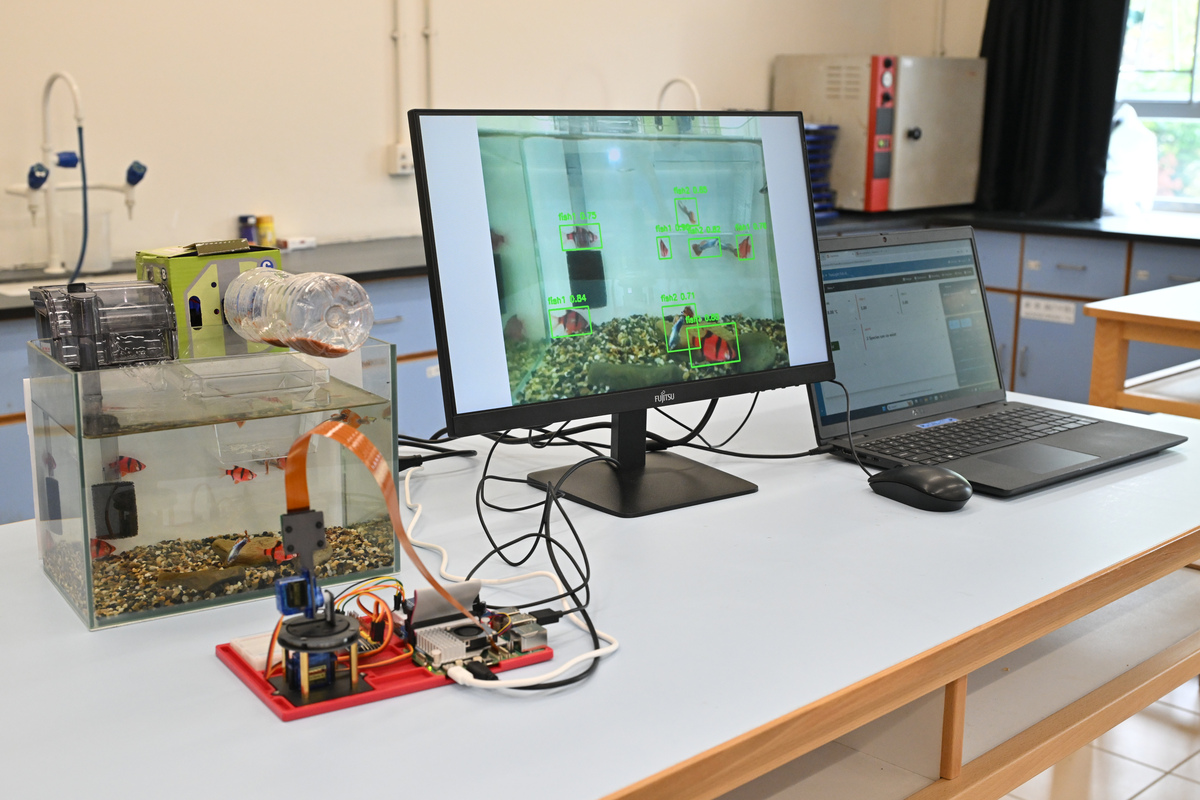
Participants in the artificial intelligence course at Kowloon True Light School have built a round-the-clock surveillance system to identify different species of fish and monitor their behaviour.
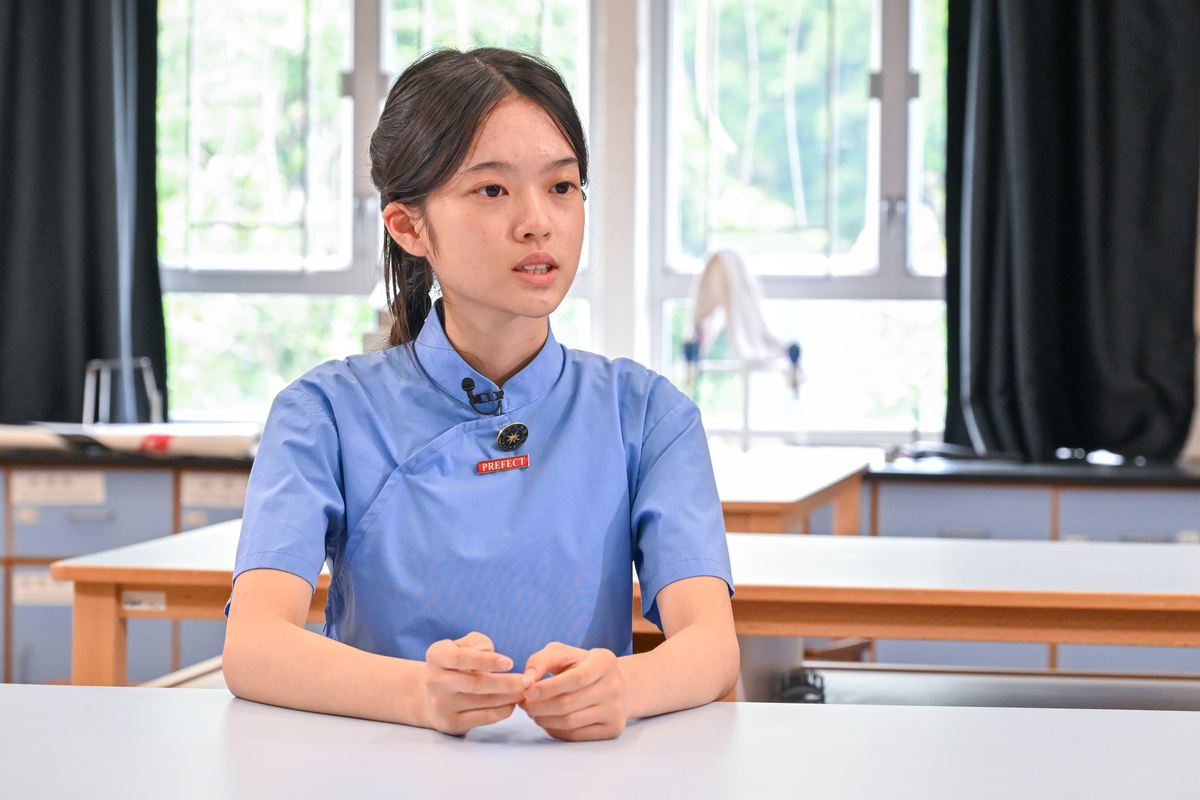
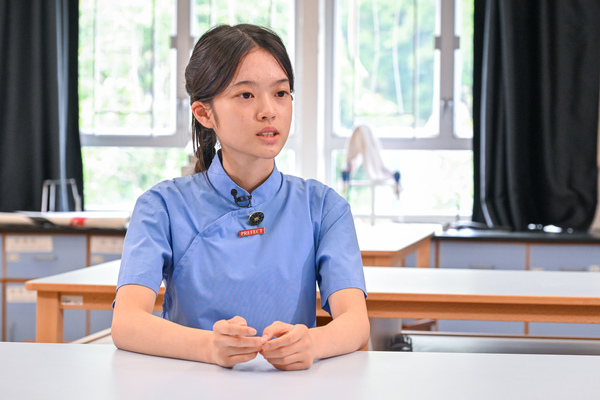
Kowloon True Light School student Camilla Yip says her interests previously lay only in ecology, but that she has learned how AI can make ecological monitoring both faster and more accurate.
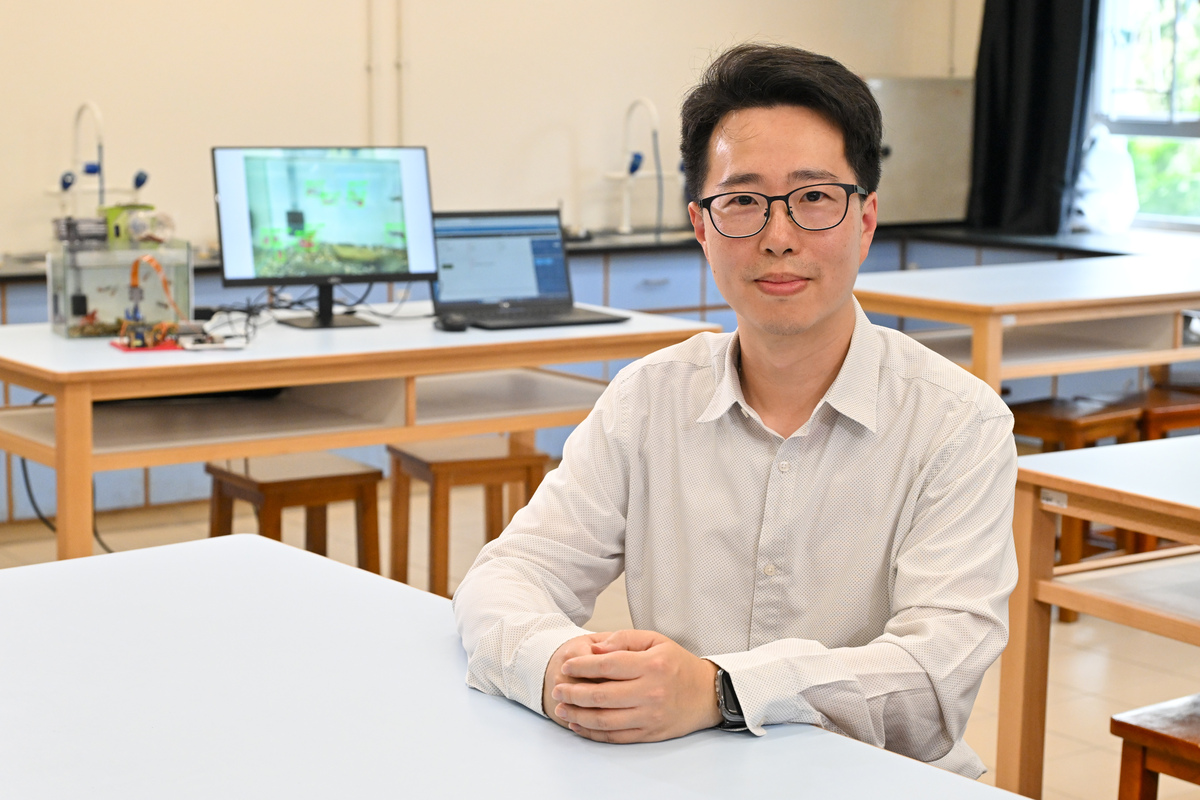
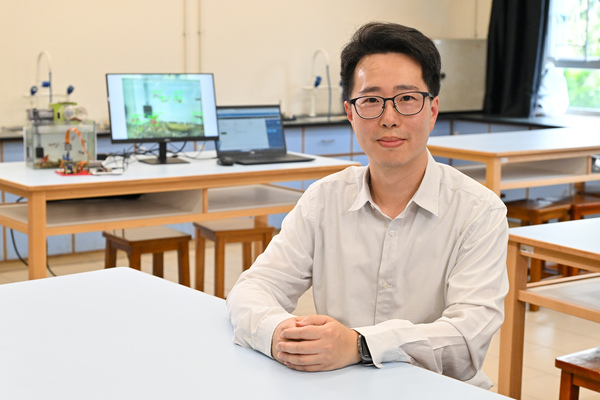
Kowloon True Light School STEAM Co-ordinator Lam Chun-tung says the course, which weaves cutting-edge technology into the school’s curriculum, is supported by a grant from the IT Innovation Lab in Secondary Schools programme.
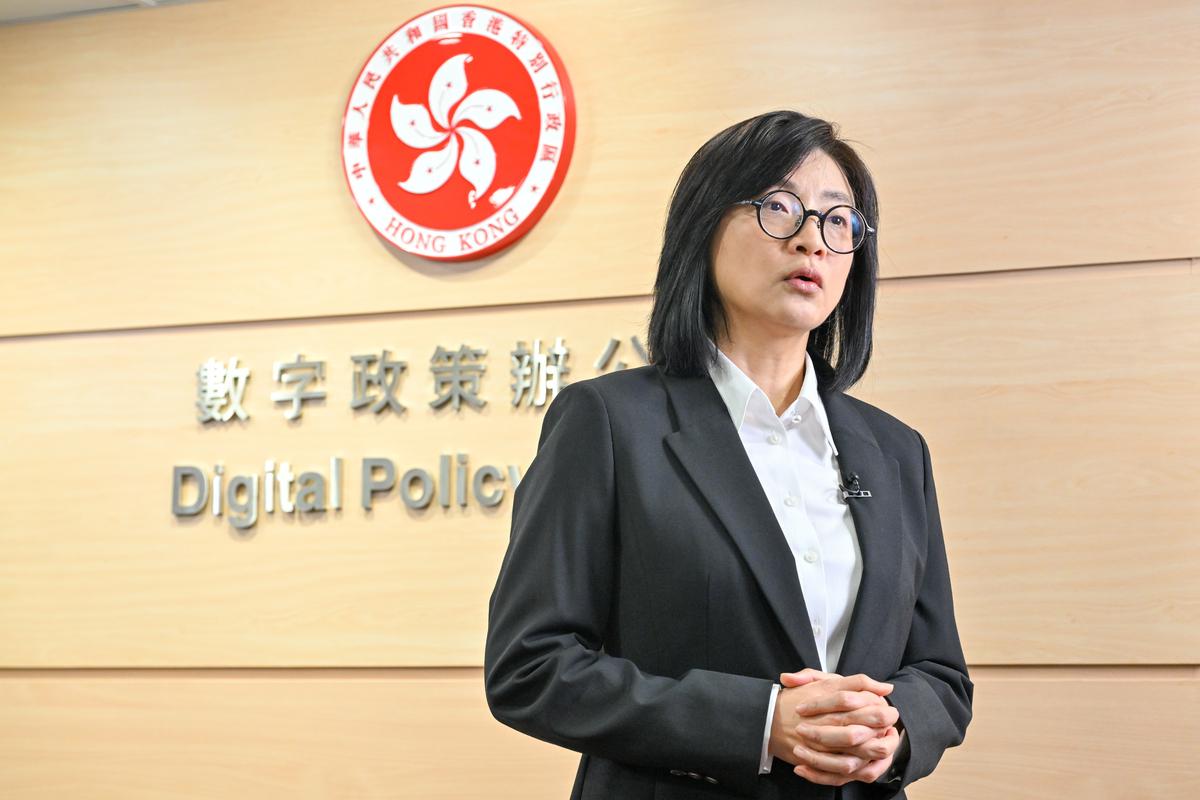
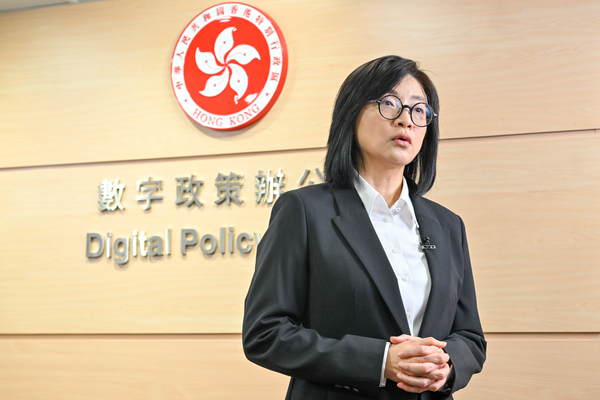
Digital Policy Office Assistant Commissioner for Digital Policy (Common Services & Sourcing) Wendy Kwan says schools and students have responded enthusiastically to the programmes.

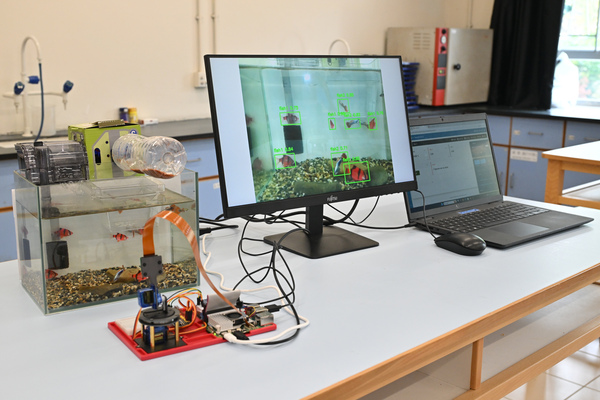
“We used simple machine learning frameworks with Python and the Raspberry Pi platform to train image classification and object detection models.”
Secondary Four student Camilla Yip was among the participants who joined an on-campus artificial intelligence (AI) programme, focused on fish identification and ecosystem monitoring, at Kowloon True Light School last year.
Driven by a fascination with fish ecology since childhood, Camilla signed up for the three-month course as soon as she learned about it.
The after-class workshop was split into two parts: first, students deepened their understanding of fish ecology through dissection and specimen preparation; then, they shifted to AI, collaborating to build a functional surveillance system using a single-board computer and an AI-powered camera.
Interdisciplinary alchemy
“Different fish species may attack each other due to contrasting sizes and habits when they are living in the same tank,” explained Camilla, highlighting the need for round-the-clock monitoring.
To train the system, Camilla gathered many pictures of various fish species and annotated the images by labelling the species and location of each fish. “I learned that AI depends on extensive data and constant fine-tuning to perform well,” she noted.
Camilla found that while manual inspection of images is slow and prone to error, AI can automatically analyse video footage to identify fish species and detect unusual behaviour.
“For example, if a fish is swimming slowly, it might mean the water quality is bad. Or it can alert us when the fish that should not be together are in the same tank.”
Camilla added that while her interests once lay solely in ecology, this experience showed her how AI can make ecological monitoring both faster and more accurate.
Cultivating capabilities
The Government is dedicated to nurturing the next generation of innovation and technology leaders.
The Digital Policy Office oversees the IT Innovation Lab in Secondary Schools programme and the Knowing More About IT programme for primary schools. By funding extra-curricular activities, these initiatives allow students to dive deep into emerging fields such as AI, blockchain, cloud computing and big data.
Kowloon True Light School STEAM Co-ordinator Lam Chun-tung said the course was supported by a $50,000 grant from the IT Innovation Lab in Secondary Schools programme, which enabled the school to hire external tutors and purchase specialised experimental equipment.
Mr Lam explained that the school joined the initiative to weave cutting-edge technology into the curriculum, creating a future-ready learning environment. He emphasised that by mastering AI, students learn to bridge the gap between theory and sustainable, real-world solutions.
Looking back at the group of 15 participants, he recalled that most had no prior experience with Python before joining the workshop.
“Throughout the process, students demonstrated outstanding collaborative spirit and achieved a significant breakthrough in their AI model training proficiency,” said Mr Lam.
Remarkable results
Digital Policy Office Assistant Commissioner for Digital Policy (Common Services & Sourcing) Wendy Kwan described the response as enthusiastic, with more than 500 secondary schools and 520 primary schools getting involved.
To date, more than $1.07 billion in funding has been approved, and over 10,000 technology-related activities have been organised, benefiting more than 790,000 students.
“These figures clearly show that the programmes have successfully promoted an innovative culture in schools, inspired students’ potential and enhanced their information technology skills,” commented Ms Kwan.
She cited an award-winning project in which pupils developed an intelligent recycling bin. The system used a small robot and an AI camera to recognise various types of waste and automatically open the correct recycling lid. The project won the Student Innovation (Primary) Bronze Award at the Hong Kong ICT Awards 2024.
Ms Kwan also highlighted another activity where students deployed Internet of Things sensors for real-time environmental monitoring, using AI to optimise the pearl farming process.
The Government’s commitment to digital excellence will continue after the two programmes conclude later this year.
To keep the momentum going, the Education Bureau has set aside $2 billion under the Quality Education Fund to encourage schools to further develop digital education. The bureau will also release the Blueprint for Digital Education later this year, setting a definitive course for AI literacy in the classroom.
In addition, the 2026-27 Budget proposed $50 million to fuel a city-wide AI culture - supporting public bodies, technology companies and tertiary institutions in hosting courses and competitions as part of a roadmap to integrate AI education into everyday life.