Dental scheme a smiling success
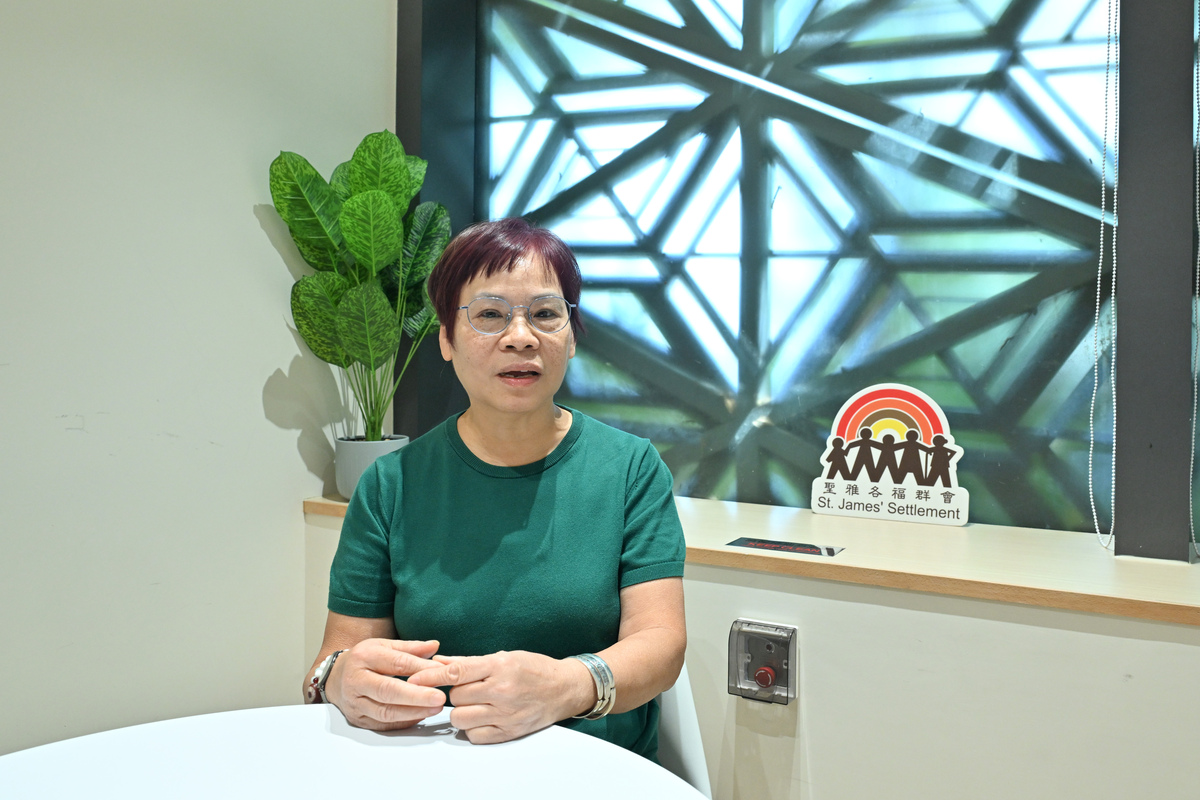
Ms Lui reveals that the programme helps her to maintain good oral health without imposing a heavy financial burden.
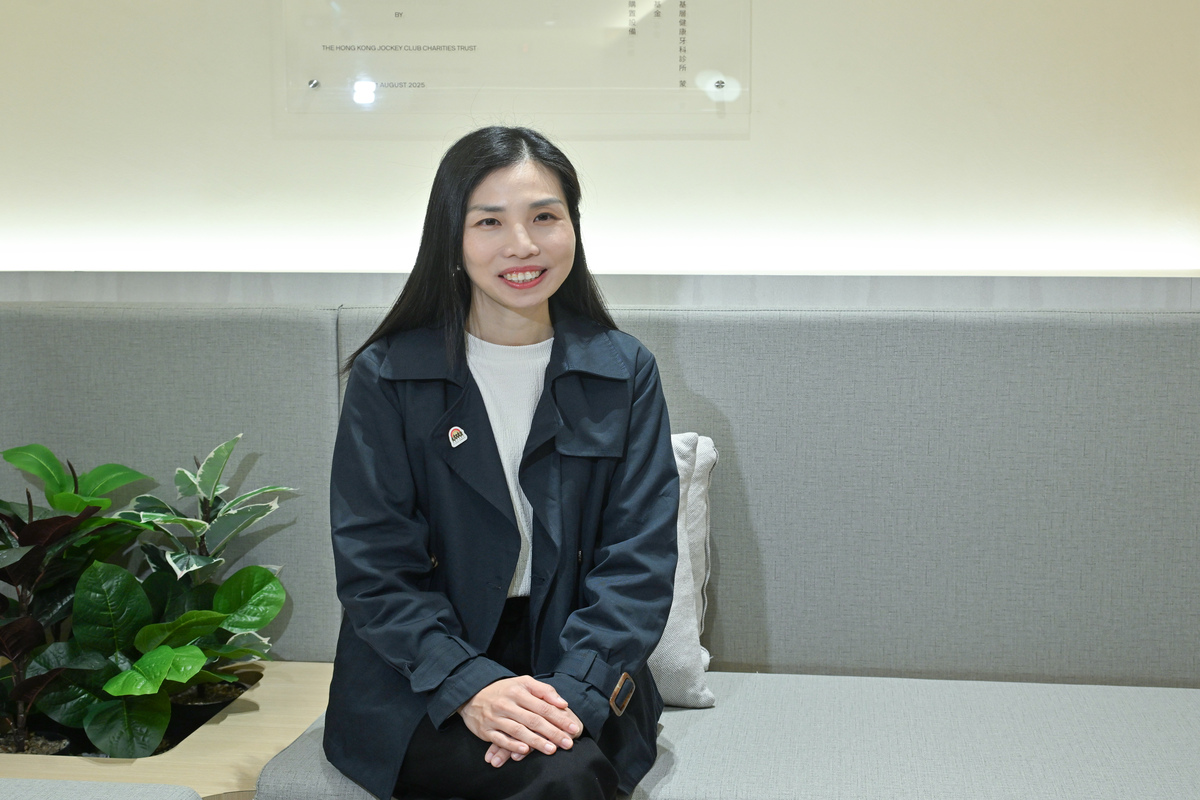
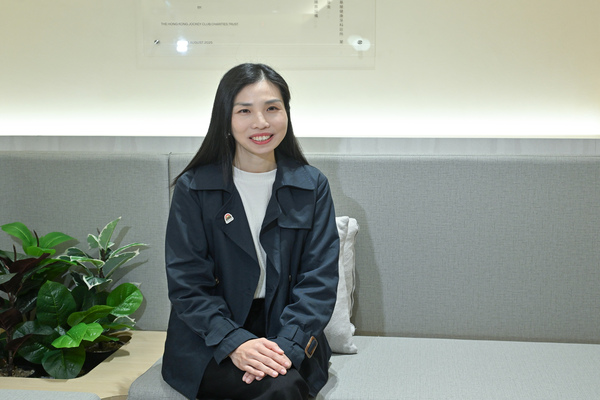
St James’ Settlement Senior Manager Mandy Au Yeung says citizens in need can seek assistance from social workers in applying to join the programme.
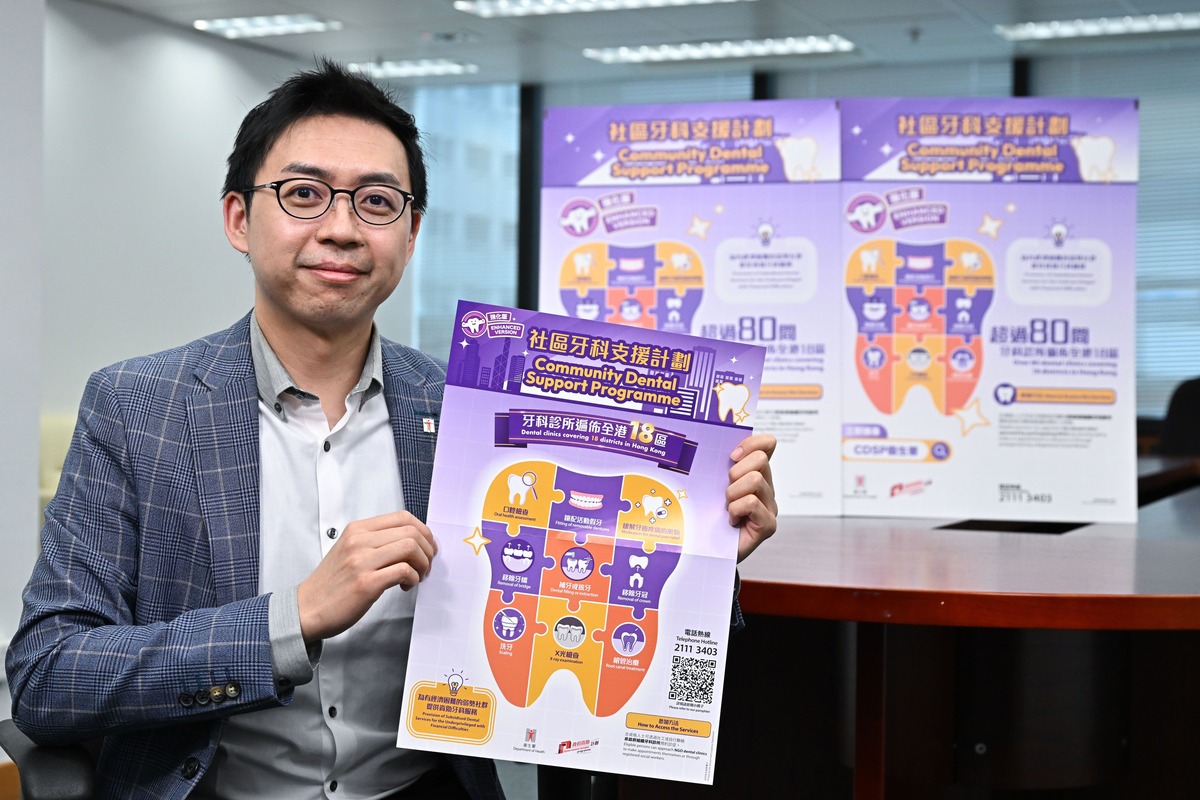
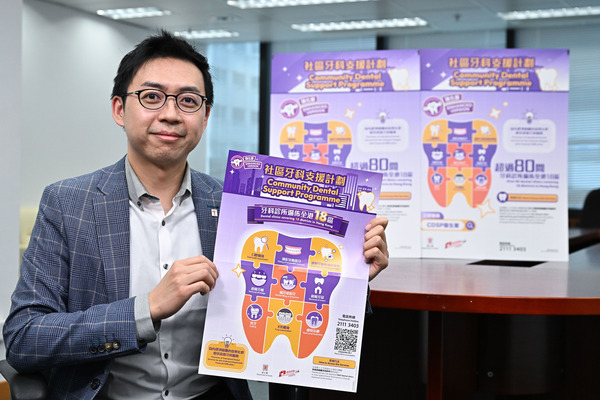
Department of Health Community Dental Service Senior Dental Officer Dr Rico Chu explains that the programme adopts a cost-sharing model to encourage personal responsibility in health management.
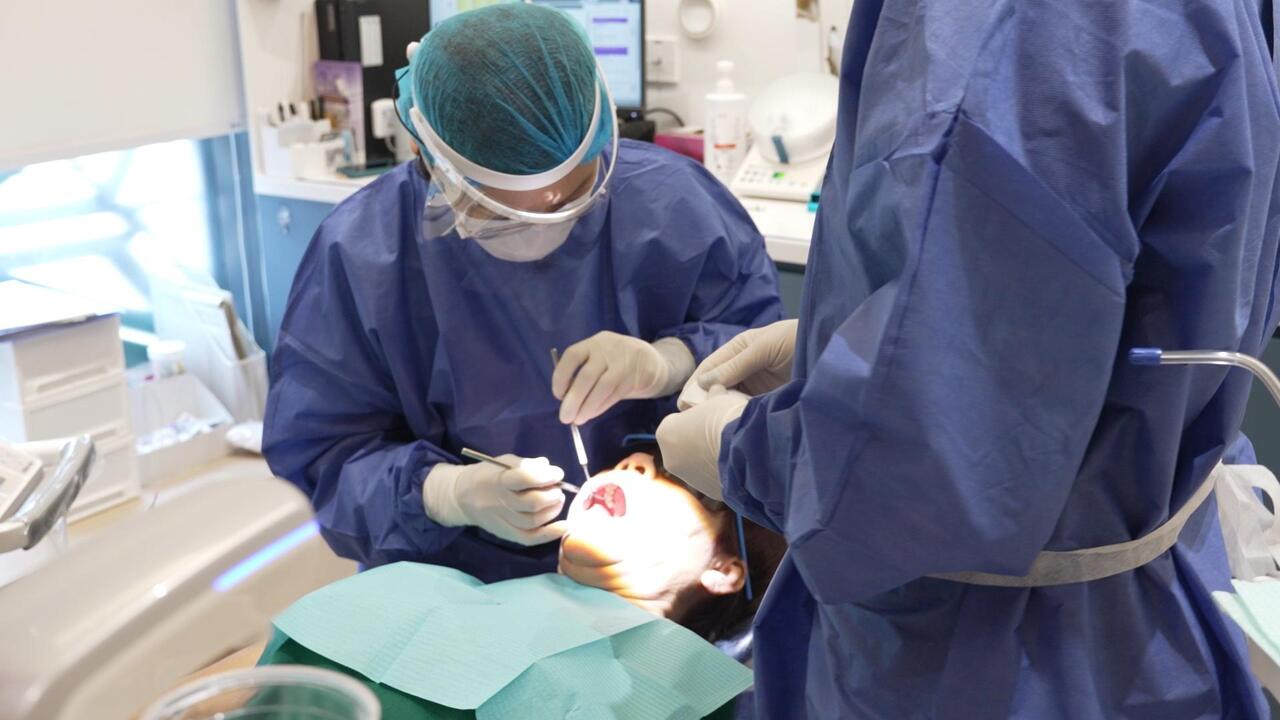
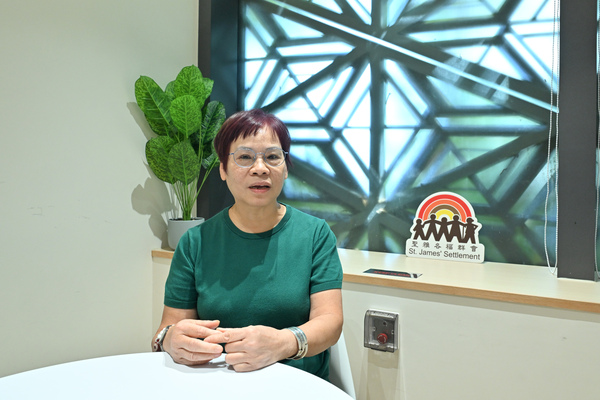
Ms Lui, an Old Age Living Allowance recipient aged 66, is a participant in the Community Dental Support Programme (CDSP). This allows her to visit a dental clinic and receive a check-up, which includes scaling and X-ray assessments.
Launched by the Government in collaboration with non-governmental organisations (NGOs), the programme provides subsidised dental services to financially underprivileged members of the community.
Financial relief
Ms Lui has long been troubled by dental cavities and diastema. She previously received treatment on the private sector but found that the fees were prohibitively expensive. As a St James’ Settlement service recipient, she learned about the CDSP through a social worker and successfully applied to enrol in it.
“The programme has really helped relieve my financial burden. The dentist here also explained in great detail how I should take care of my teeth.”
Encouraging participation
St James’ Settlement Senior Manager Mandy Au Yeung explained that the organisation’s staff proactively enquire about service users’ circumstances. If they meet the eligibility criteria, they are urged to apply to join the programme.
The NGO also displays leaflets and posters at its two dental clinics and various service units to raise awareness of the programme and encourage people to recommend it to potential beneficiaries.
Expanding scope
Department of Health Community Dental Service Senior Dental Officer Dr Rico Chu said the Government aims to encourage prevention, early identification and timely intervention when it comes to dental diseases, thereby enhancing both oral health and general health among citizens. As of March 4, more than 10,000 eligible persons had received subsidised dental services via the CDSP. This included inserting 14,035 dental fillings and conducting 4,939 extractions.
From the beginning of this year, the programme has been expanded to cover four additional services, namely dental scaling, root canal treatments, the removal of bridges and crowns, and fittings of removable dentures. Coverage has also been extended to include homeless individuals.
“With the new services and expansion of the service beneficiaries, we are expecting to provide an additional service capacity of about 40,000 participants each year, further enhancing dental services for the underprivileged with financial difficulties and expanding the scope of subsidised preventive and curative dental service.”
Costs shared
The programme adopts a cost-sharing model that takes into account the affordability of services to users while also recognising the need to encourage personal responsibility in health management. Treatment plans are devised with regard to actual clinical needs and the feasibility of treatments.
Currently, the programme operates more than 80 service points, run by 32 different NGOs. The Government will continue to monitor service usage and demand, and will periodically review the programme.