AI powers solo startup success
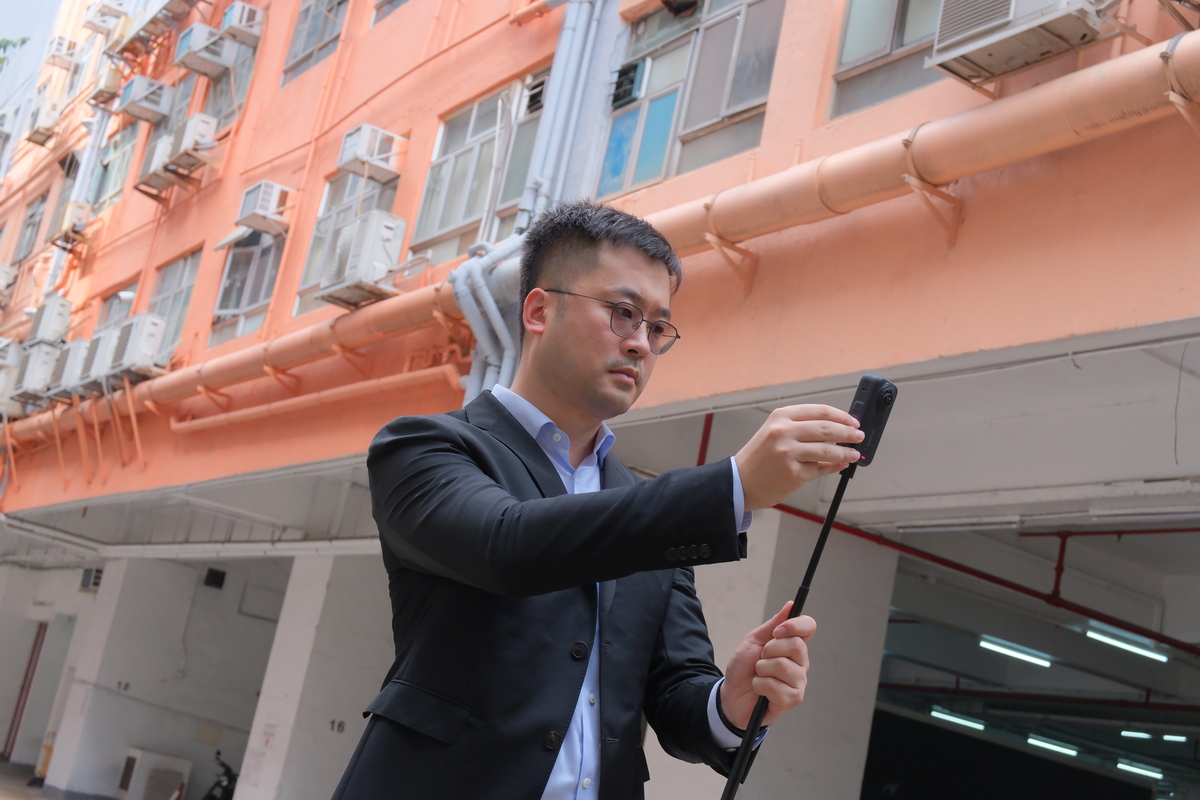
One-person company founder Jeffrey Yang leverages the Government’s free and open spatial data to develop an AI-driven building management platform, significantly reducing the cost of collecting data on his own.
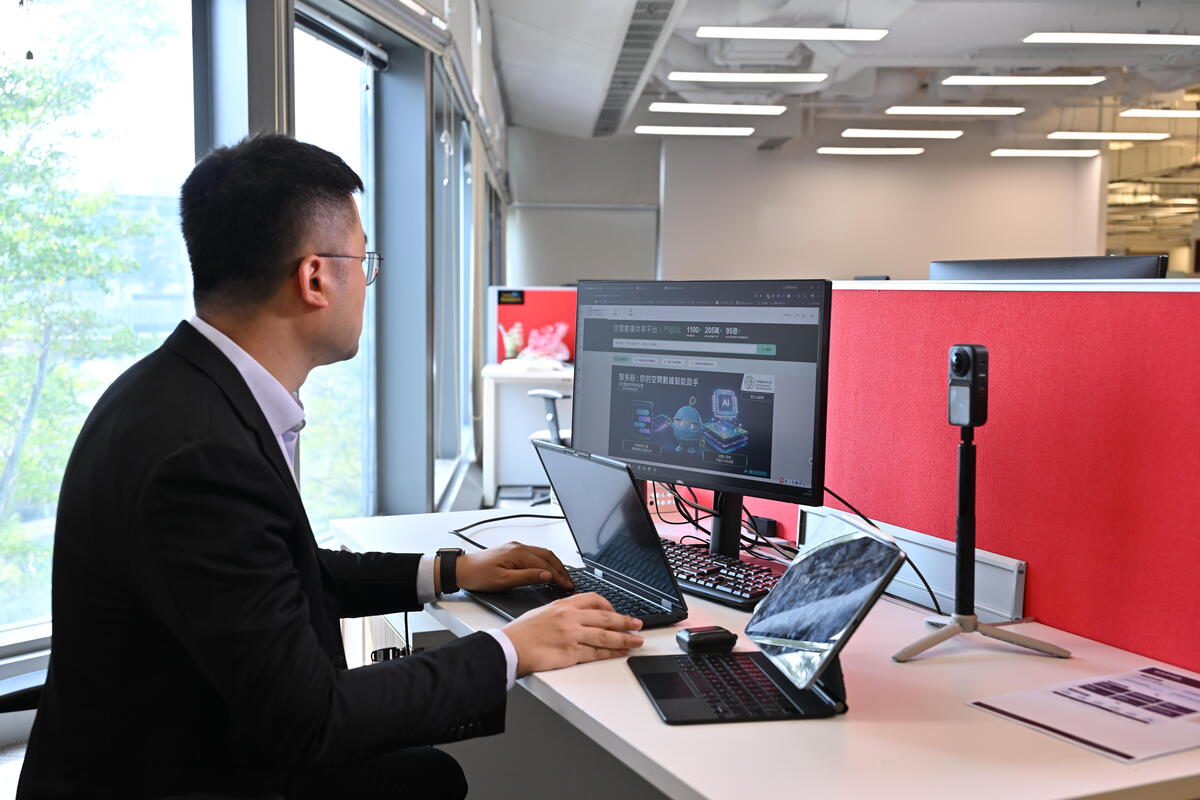
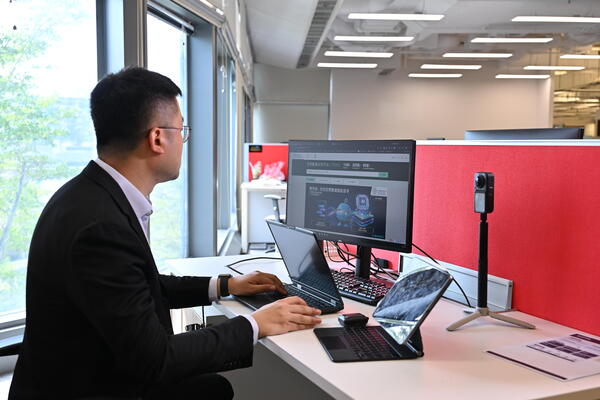
Mr Yang works daily at the OPC Hub, deploying a suite of AI agents to handle tasks such as data analysis, building inspections and repair co-ordination.
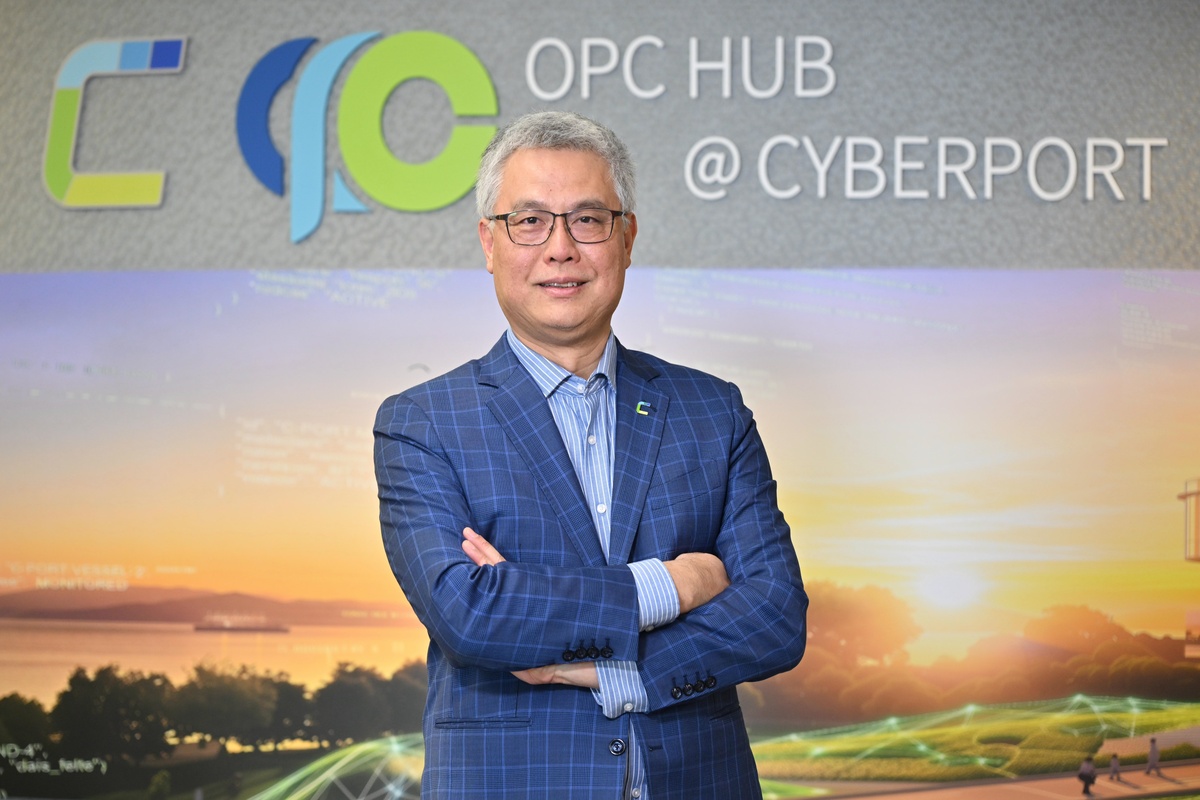
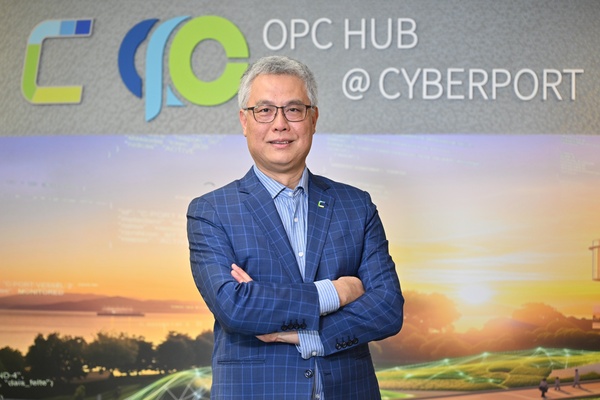
Cyberport Chief Executive Officer Rocky Cheng notes that the OPC Hub offers AI technology facilitators, including discounted tokens, computing power, cloud services and cybersecurity consultations.
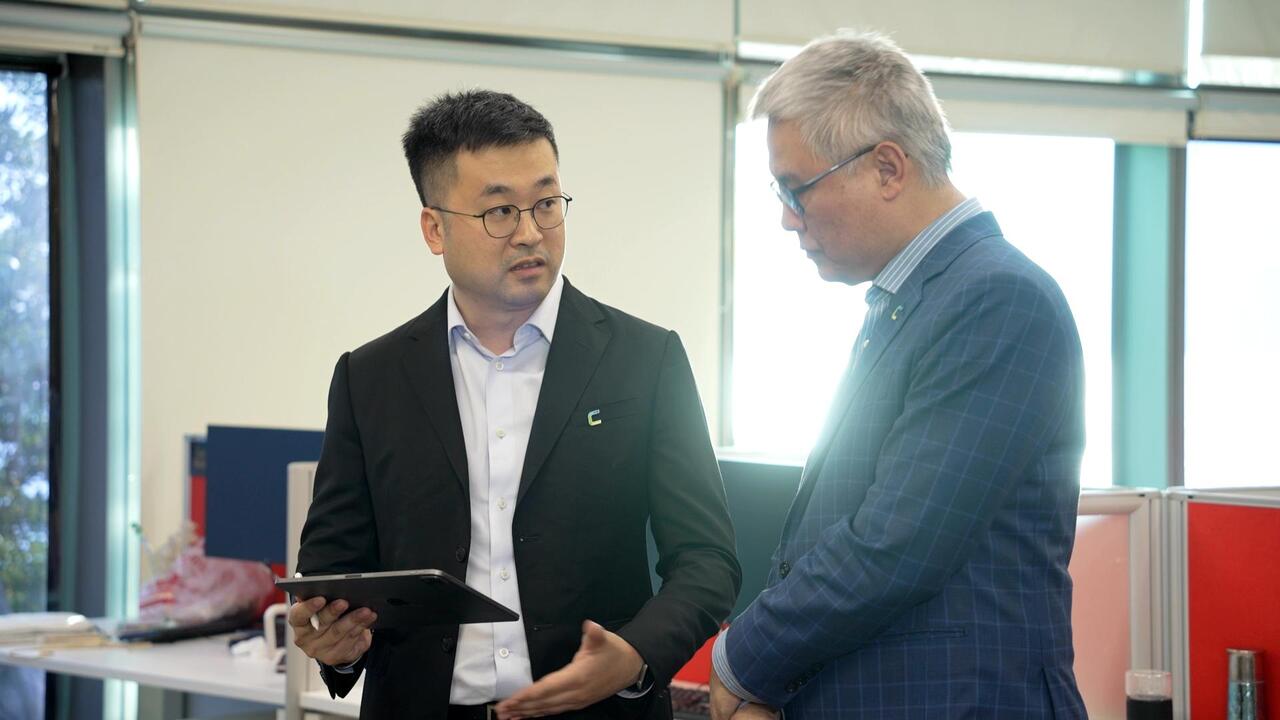
Agentic artificial intelligence (AI) is revolutionising the way entrepreneurs operate.
Jeffrey Yang, formerly a construction tech entrepreneur from Shanghai, moved to Hong Kong to pursue a doctorate in real estate and construction. When he saw how many of the city’s buildings were ageing, he set out to create an AI platform to make building management more efficient.
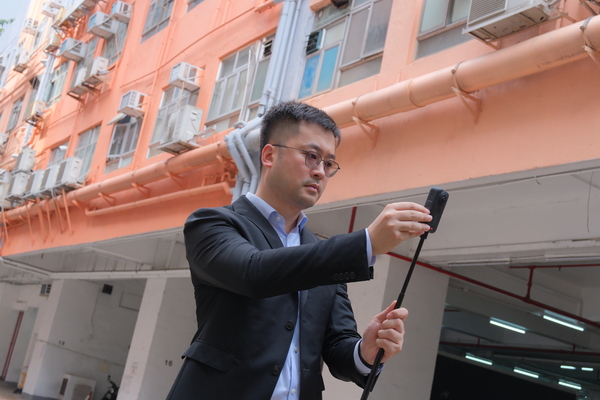
“We typically use panoramic cameras and drones to detect building issues like exterior wall cracks or water leakage,” Mr Yang explained. He pointed out that Hong Kong has more than 20,000 buildings over 30 years old, a factor that makes manual analysis both manpower- and resource-intensive.
"I have trained the AI on mandatory repair notices and regulations so it helps identify issues. Through the platform, building owners can understand their building’s condition well in advance and meet compliance requirements after repairs."
One-person results
Traditional business ventures, regardless of their scale, often require hiring staff, leasing premises and developing complex systems, usually requiring at least 10 people to get things off the ground.
However, by joining Cyberport’s OPC (one-person company) Hub – an incubator designed specifically for one-person companies – Mr Yang is bringing his visions to life with just one person and a single computer. He said the Government’s free spatial data has provided a significant advantage, drastically reducing the costs and difficulties typically associated with data collection.
"I need to build city-scale spatial scenes in the early stages. Few cities worldwide offer open 3D spatial data, but with Hong Kong’s recent 3D photography publicly available, I am able to use a large amount of open data."
Every day, Mr Yang develops his platform within the co-working space of the OPC Hub. He manages a suite of AI agents, each handling a different task – from data analysis and building inspections to repair co-ordination and equipment maintenance.
Empowering innovation
Since its launch in July this year, the OPC Hub has received over 40 applications, with more than 30 companies already approved to join.
These companies span various sectors, including proptech, creative design, financial trading, education and cybersecurity. The talent pool is evenly split, with local entrepreneurs making up roughly half the cohort, and Mainland and overseas talent comprising the remainder.
"OPC could be a small team of one to 10. Whether pursued full-time or part-time, it is easy to test ideas and the cost of trial and error is very low,” explained Cyberport Chief Executive Officer Rocky Cheng, who noted that OPCs benefit from low overhead and rapid startup times.
“A small handful of people can now drive 10, dozens or even hundreds of AI agents to assist with product design, website development, marketing, data analysis, financial management and customer service."
He said that as long as the founders identify pain points or come up with innovative ideas that are well-received in the market, investors will take notice because investing at this stage is more cost-effective.
Beyond standard support, such as entrepreneurship training, business and investor matching, and professional services, the OPC Hub also provides AI technology facilitators, including discounted tokens, computing power, cloud services and cybersecurity consultations. This comprehensive support helps founders prioritise data privacy, permissions and AI security from the outset, enabling them to turn their concepts into market-trusted solutions.
Mr Cheng said this entrepreneurial trend is already taking off in the Mainland, and he believes it is set to experience similar growth in Hong Kong.