'Four centres' measures outlined
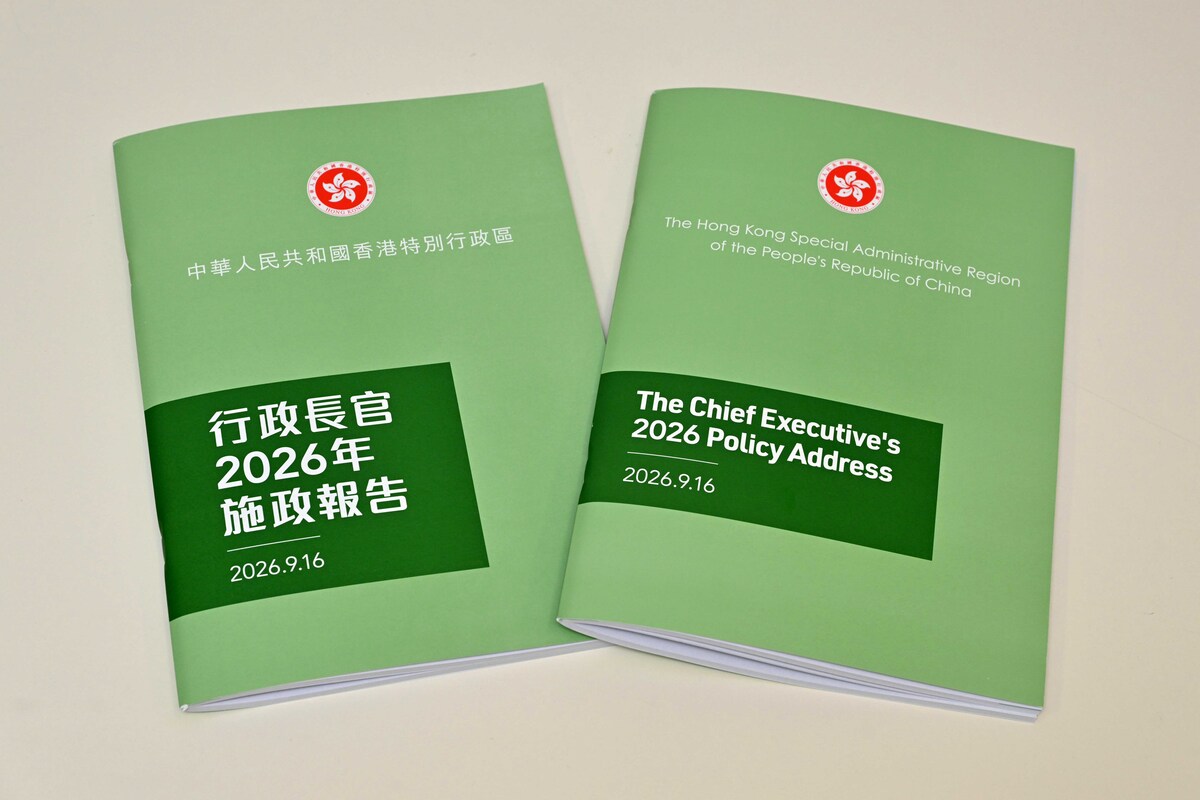
The Policy Address seeks to realise Hong Kong’s Five-Year Plan by adjusting policy agenda and formulating work indicators annually.
Delivering his 2026 Policy Address this morning, Chief Executive John Lee outlined various measures to strengthen Hong Kong’s “four centres”, or the city’s development as an international finance, maritime and aviation, trading, and innovation and technology centre.
Key initiatives include developing a commodity trading system, strengthening high value-added maritime services, fostering the development of the sustainable aviation fuel (SAF) industry, and building a high value-added supply chain services centre.
Financial centre
Regarding the city’s diversified development as an international financial centre, Mr Lee said Hong Kong would aim to consolidate the leading positions of its stock market, deepen its presence in areas such as bonds, specialty insurance and Renminbi (RMB) business and make forward plans for emerging sectors such as tokenised products.
In terms of RMB business, the Hong Kong Monetary Authority is exploring enhancements to the currency swap agreement with the People’s Bank of China, as well as arrangements for direct exchanges between offshore RMB and other currencies.
On bonds, connectivity will be strengthened between the Central Moneymarkets Unit and markets in Europe and America, the Middle East, Central Asia and the Association of South East Asian Nations. Meanwhile, a consultation will be held on streamlining prospectus disclosure requirements to facilitate the listing of quality overseas enterprises in Hong Kong, and tests will be conducted on the tokenisation of Exchange Fund Bills.
Mr Lee also highlighted that specialty insurance – covering gold storage, commodity trading, green-fuel bunkering and more – will be developed to meet the needs of emerging industries.
In terms of the development of commodity trading, the Government will implement a half-rate tax concession for physical commodity trading, and will explore the provision of tax concessions for qualifying activities within the gold and commodity trading ecosystem.
Aiming to expedite the development of an international gold trading market, Hong Kong Exchanges & Clearing will announce details of new RMB-denominated and physically settled gold futures contracts.
Meanwhile, a Joint Working Group on Commodity Trading will be established to identify market opportunities and prospects for cross-exchange collaboration.
Maritime centre and aviation hub
In relation to Hong Kong’s development as an international maritime centre, the development focus will further shift from traditional port logistics to leveraging the city’s advantages in high value-added maritime services, covering areas such as ship management, ship leasing, ship finance, marine insurance, and maritime law and arbitration.
Mr Lee said the Government will announce plans later this year to develop a Hong Kong-centric “Green Energy Corridor” in collaboration with a Mainland city. Furthermore, it will establish a clear and transparent carbon-emissions calculation framework for the bunkering and trading of green maritime fuels, drive the expansion of underwriting capacity in the industry’s marine specialty risk pool.
Support will also be given to the development of onshore power-supply facilities, exploring port dues incentives to attract international liners, and the establishment of a maritime academy in Hong Kong.
Meanwhile, in terms of Hong Kong’s status as an international aviation hub, Mr Lee outlined efforts to foster the development of the SAF industry. He said the Government has spearheaded the establishment of a world‑leading SAF production base in Dongguan, which will begin production by 2030, and plans to construct an SAF blending facility in Hong Kong.
The Government is also studying the establishment of a mandatory consumption‑ratio mechanism and the development of a green energy certification system to boost Hong Kong’s green energy value chain and maintain a long‑term supply of competitive SAF.
Trade centre
Vowing to consolidate Hong Kong’s role as an international trade centre and build a high value-added supply chain services centre, Mr Lee said the Government would deepen the work of the Task Force on Supporting Mainland Enterprises in Going Global.
A bill is to be introduced in the Legislative Council to provide pre-approved Corporate Treasury Centres and their associated companies with additional flexibility and tax benefits. Meanwhile, digital trade will be promoted in a bill facilitating the digitalisation of “business-to-business” trade documents.
Mr Lee added that a “Task Force on High Quality Development of Textile and Fashion Industry” will be established, to be led by the Secretary for Commerce & Economic Development.
Visit Chapter III of the Chief Executive’s Policy Address for more details.