Over 5k take part in port drill
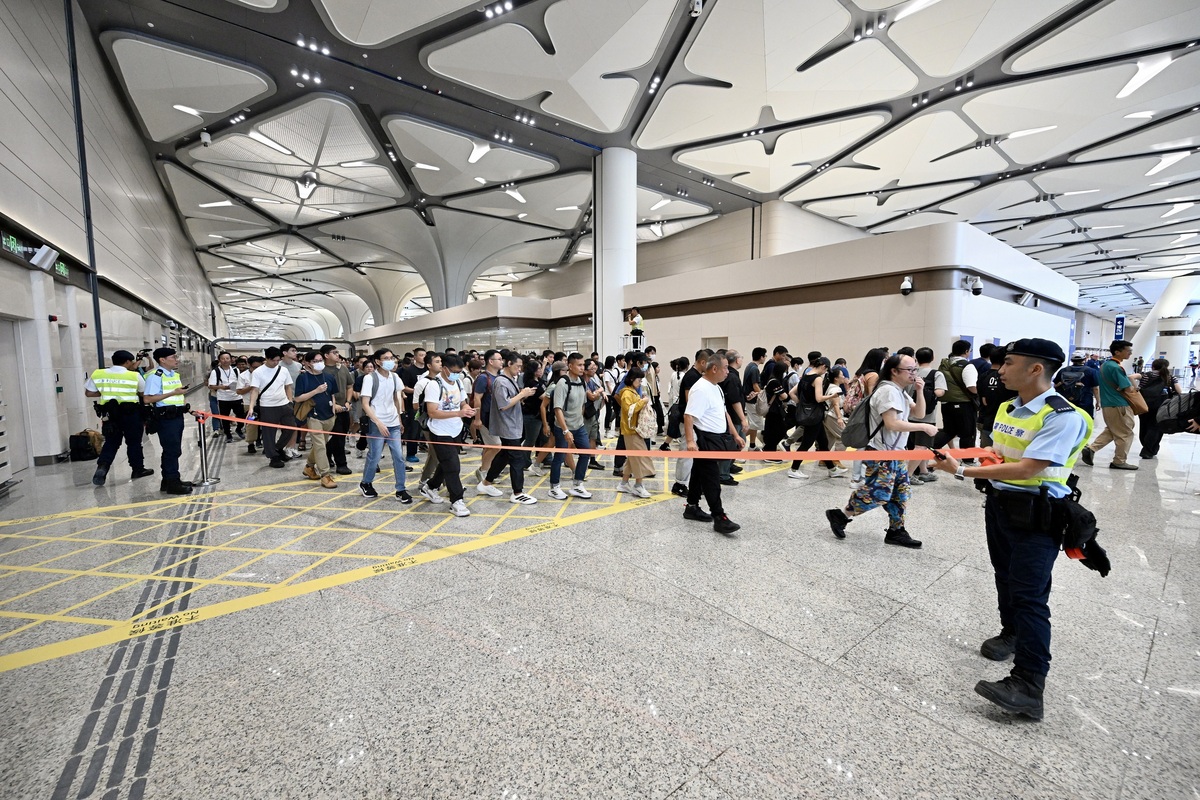
The drill simulates a situation where a large number of arriving passengers proceed to the public transport interchange.
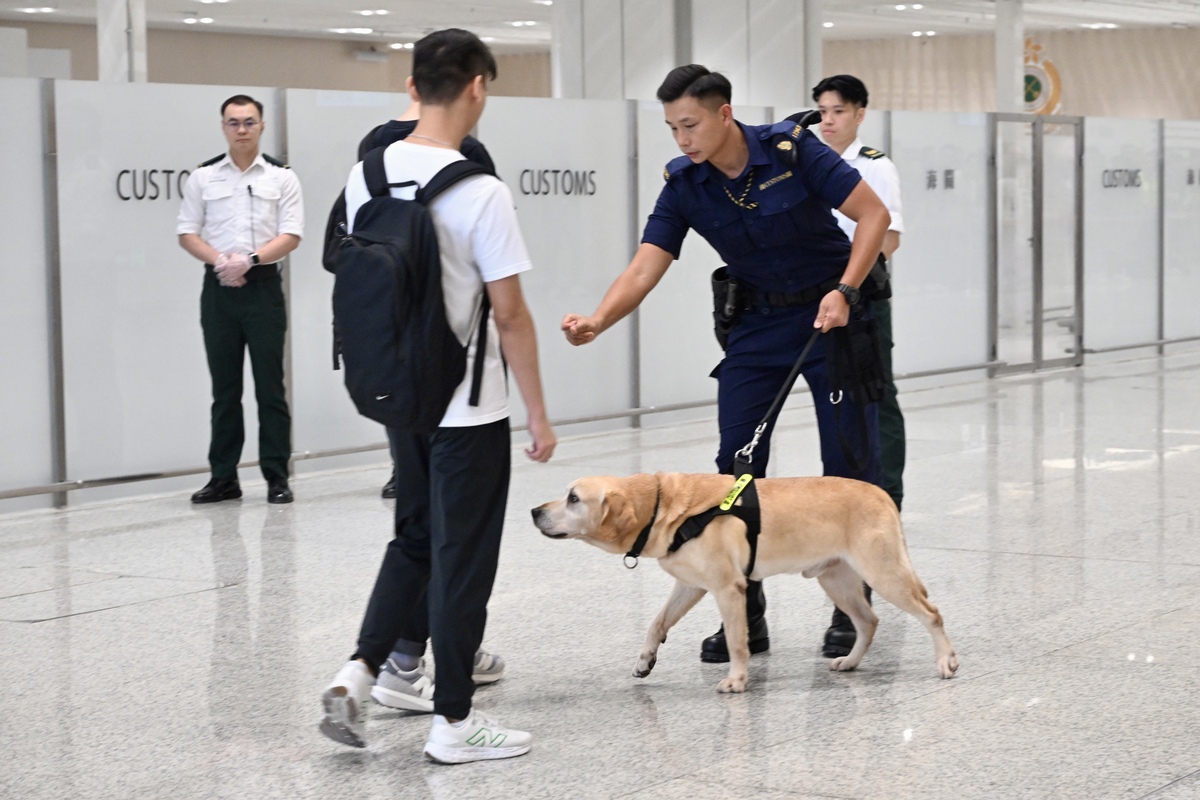
The counter-terrorism exercise imitates the detection of firearms and ammunition on extremists.
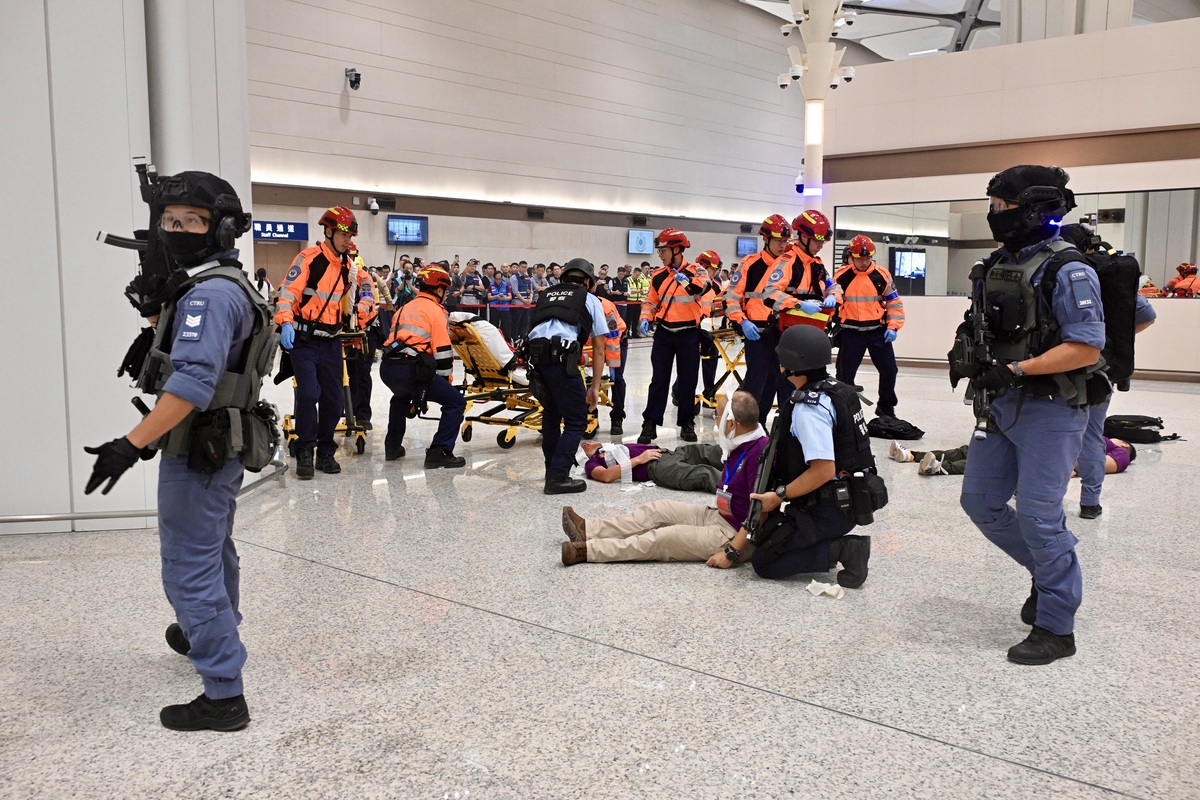
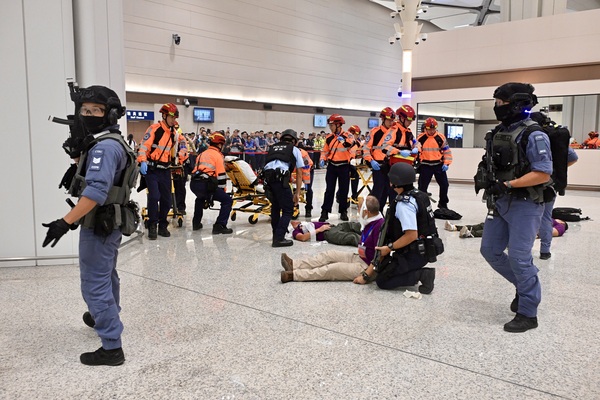
Participants are faced with a simulation of extremists launching a shooting attack and causing mass casualties.
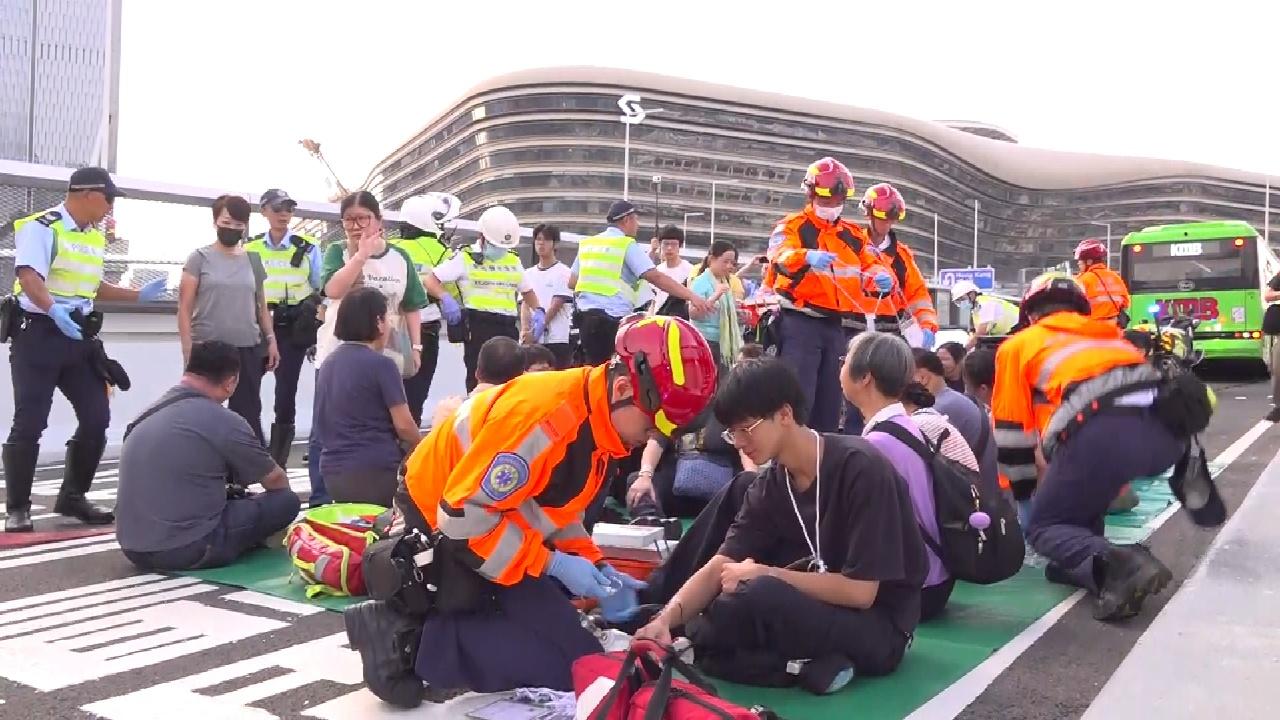
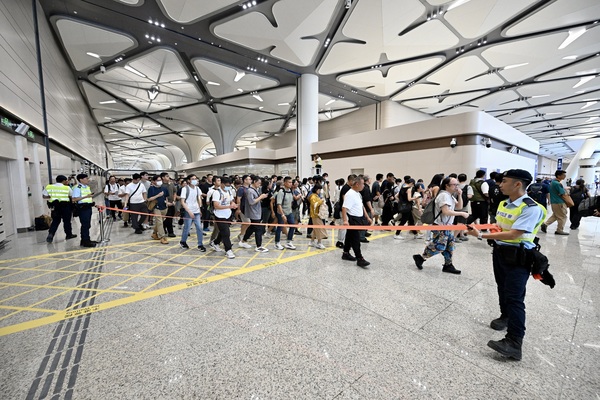
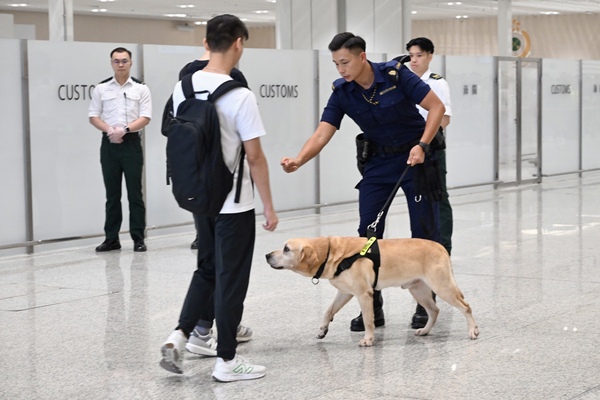
The Hong Kong Special Administrative Region Government conducted its second large-scale drill at the Huanggang Port Hong Kong Port Area today to further test the overall management of passenger and vehicular flows at the port building and the public transport interchange (PTI).
An inter-departmental counter-terrorism and major incident exercise was also held to strengthen the response capabilities of various departments in emergency cases.
The exercise mobilised about 5,000 civil servants from around 30 departments. During the drill, participants took various modes of public transport to arrive at the port. They then proceeded to the departure hall and the arrival hall of the port building. Subsequently, they left the port by taking public transport as instructed.
Participants and vehicles dispatched by various public transport operators took part in cyclical trials involving more than 250 departures to simulate the flow of people and vehicles arriving and departing from the port.
Participants in the drill simulated queuing for immigration clearance procedures in the departure hall and the arrival hall to test the relevant crowd-control arrangements.
This drill also featured a new “crowd concentrated-flow test”. A large number of participants were first held on designated floors, in order to create a short-term unforeseen surge pressure subsequently by simulating a situation where an influx of passengers arrive and proceed to the PTI.
This is to test inter-departmental co-ordination arrangements and further test the effectiveness of the management of passenger and vehicular flows and various supporting measures.
During the drill, different types of tests were also featured. These included simulating the operational arrangement of small vehicles crossing the boundary; simulating a large number of departing passengers queuing to use the clearance facilities; and a large number of passengers gathering at the PTI to wait for individual public transport services.
Other tests involved the Department of Health’s quarantine station discovering suspected infection cases and requesting ambulancemen to co-operate in handling the situation; and the taxi management arrangements being activated in response to a large number of taxis going to the PTI.
The flow test was followed by an inter-departmental counter-terrorism and major incident exercise conducted at the departure hall on the fifth floor of the port building.
The exercise simulated a scenario in which extremists launched a shooting attack after they were discovered to possess firearms and ammunition, causing mass casualties and requiring immediate evacuation.
The exercise aimed to enhance departments’ co-ordination and response capabilities in handling terrorism and violence-related intelligence, and responding to different forms of terrorist attacks.
Next, different departments conducted a major-incident exercise, which simulated a serious traffic accident on the new connecting road to the port, thereby hindering vehicles from using the original route to enter the port.
Traffic was redirected under police instruction to use the southbound route, with one-lane two-way, intermittent access to the port’s PTI. Vehicles were also directed to leave the port and return to the urban area.
Secretary for Security Tang Ping-keung inspected the drill on-site, which was conducted smoothly. He held a meeting with the participating departments afterwards to review the flow and suggestions given by the participants, in order to make further enhancements in subsequent drills.