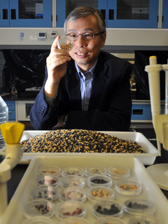
Full of beans:
Prof Lam Hon-ming has a passionate drive for soybean research.
Full of beans:
Prof Lam Hon-ming has a passionate drive for soybean research.
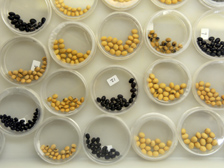
Nutritious crop:
Made up of 40% protein and 20% oil, soybeans are a highly nutritious yet cheap food source.
Nutritious crop:
Made up of 40% protein and 20% oil, soybeans are a highly nutritious yet cheap food source.
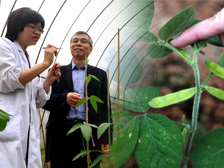
Home grown:
A gene garden has been created by the Centre for Soybean Research at the Chinese University of Hong Kong campus.
Home grown:
A gene garden has been created by the Centre for Soybean Research at the Chinese University of Hong Kong campus.
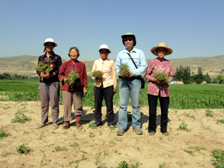
Field study:
Prof Lam Hon-ming visits rural Mainland regions to observe soybean production.
Field study:
Prof Lam Hon-ming visits rural Mainland regions to observe soybean production.
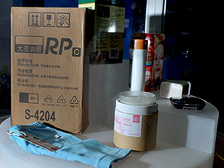
Soy products:
Apart from food, soybeans can be processed into candles, ink, and clothes.
Soy products:
Apart from food, soybeans can be processed into candles, ink, and clothes.
Unlocking the soybean dream
May 05, 2013
Chinese University of Hong Kong Professor Lam Hon-ming has a passion for soybeans, a nutritious cash crop first domesticated in China. He named his research “Soybean Homecoming” after seeing the huge amount of money the Mainland was spending to import soybeans. His dream is to bring soybean research and production to a more advanced level in its homeland.
Soybeans can be processed into tofu, soy milk, and soy sauce. Made up of 40% protein and 20% oil, they are a highly nutritious yet cheap food source.
Soybeans were first domesticated in China more than 3,000 years ago. In the 18th century, the crop was introduced to the Americas and flourished across the two continents. The US, Brazil and Argentina now account for more than 80% of global soybean production.
The Mainland spent about $200 billion on imported soybeans in 2010.
As a Chinese person, Prof Lam says he has a special passion for soybeans. He wondered if something could be done to improve the productivity of soybeans in the crop's homeland.
Genetic research
Prof Lam’s research focuses on identifying genes in wild soybeans that make them more tolerant.
Compared with cultivated soybeans, wild ones have a lower yield but can adapt to adverse environments. Prof Lam found the genetic diversity of the Mainland's cultivated soybeans has become very limited due to human selection, and as a result they may have lost their ability to adapt to adverse environments.
Through genomic analysis and cross-breeding, Prof Lam hopes to combine the advantages of wild and cultivated soybeans to produce a new soybean line tolerant to salinity changes and drought, to ensure maximum productivity.
“It is particularly important for China because after 3,000 years of cultivation, many land resources have deteriorated, with limited nutrients, limited water supply and high salinity. If we can improve the stress tolerance of the soybean, we can use those marginal lands to grow the crop.”
Devoted determination
Prof Lam has immersed himself in laboratory research and field experiments on the issue for more than decade. He has visited the Mainland's northwest and northeast regions to observe soybean growing, exchanging ideas with farmers and agricultural experts.
Prof Lam feels his knowledge can be applied to the Mainland's fields to help farmers. However, his passionate drive can sometimes feel like a lonely road.
“In Hong Kong, I guess most people know about business, commercial activities or medical research. It is very difficult for me to explain to students why agriculture is so important. This research is very advanced. But we need to do it because we need to open the eyes of students and share the vision with them.”
To promote the research, an
exhibition is being held at the Hong Kong Science Museum until the end of July. Visitors can see soybean products like food, cosmetics, candles, ink, and clothes.