

Health & Community
Creating a digitally-inclusive society

May 11, 2012
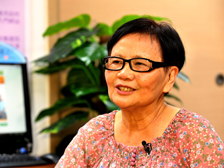
Seventy-year-old Janet Lui is a retired childminder. She now enjoys her daily life, not only travelling or having tea with friends, but using computers and chatting online with elderly friends.A year ago Janet had no experience in using a computer.
“Most elderly, including me, had no intention of touching a computer, which was more for our sons or grandsons. I was so afraid I would cause problems with the computer, cause a hardware malfunction, or change the settings wrongly.”
Last year Janet made use of the money offered by the Government’s Scheme $6,000 to buy her own computer.
A new joy
With a great interest in learning, she started training herself on computer knowledge. She practised using a mouse by playing computer chess games.
After months of learning, Janet now has her own Facebook account. She watches videos and browses daily news on the Internet. She also loves to share photos with friends.
"I like looking at other people's photos on the Internet, especially baby photos. The Internet makes my life happier.”
Janet also attends training courses of an elderly computer learning centre supported by the Government. It also provides a specially-designed website for the elderly, www.e123.hk. It contains bigger text fonts and touch-screen functions enabling the elderly to use it more easily.
It also features news, activities and information of interest to the elderly.
The site has 25,000 members and garners more than 380,000 site hits per month.
Helping low-income families
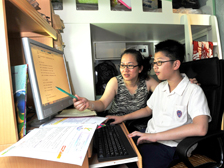
Kwong Chun-hin is a Primary 5 student. Since Primary 3 he started having computer lessons and homework. However, his family could not afford a computer for him.
His mother said: "I went to the shops several times and found the minimum price of a computer was from $3,000 to $4,000. A broadband Internet service costs about $200 a month. I also worried about the maintenance fee. All of them are too expensive."
Chun-hin used his school library’s computer to finish his homework during recesses and lunchtimes.
Last September the family bought a computer through the Government’s Internet Learning Support Programme. The price was about half of the market price. Now Chun-hin can learn different computer skills with his mother, and they can use the Internet together.
Chun-hin said: "Mum used to have long-distance calls with relatives on the Mainland, but the service fee was expensive. Now, with webcams and related software, she can chat with them online for free. Also, I can do my homework and absorb knowledge through the Internet.”
Chun-hin can also join social websites to discuss current affairs with his classmates and teachers online.
Computer literacy growing
The Government has worked to build an inclusive, knowledge-based society. A survey found that computer knowledge and usage among the elderly increased from 5.8% in 2008 to 19.8% last year.
For children in low-income families, about 97% of them have computers connected to the Internet.
Government Chief Information Officer Daniel Lai said: "We are hoping that by 2014, all low-income family students can access computers and the Internet at home. For citizens above the age of 60, through the recognition scheme and the operation of the website and training programme, we are hoping the number of elderly who can use the computer and access the Internet will be one in four."
Computer usage for the disabled was 21.3% last year.
Mr Lai said he looks forward to promoting the Government’s Web Accessibility Campaign to encourage more disabled people to use the Internet and access websites of interest to them.
It is hoped that half of the 50 websites frequently visited by the disabled can adopt web accessibility design by 2014.